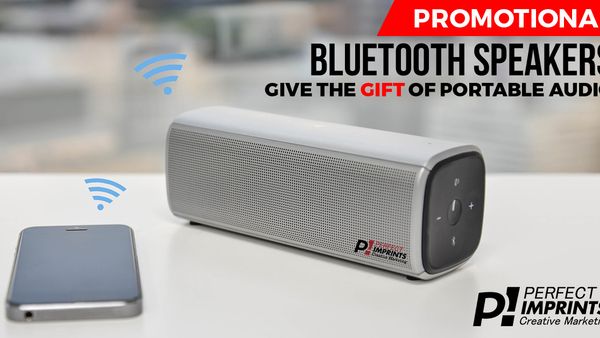
When evaluating custom speakers for your next order, start by considering the listening environment and audience size. A compact Bluetooth speaker works well for individual use at a desk or in a small office, while a soundbar or karaoke machine suits group settings like break rooms, training sessions, or outdoor events. Battery life typically ranges from 4 to 12 hours depending on the model, so match that to how long recipients will use the speaker away from a power source. Water resistance ratings (IPX4, IPX5, etc.) are important if the speaker will be used outdoors or near drinks.
Materials and Build Quality
Most promotional speakers use ABS plastic for the housing, with silicone or rubberized coatings on portable models for drop protection. Fabric mesh grilles are common on higher-end units and can be printed or embossed with a logo. Check the weight and dimensions if you are shipping the speaker as part of a gift set or swag bag. Lighter models save on shipping costs but may have smaller drivers and lower volume output. For bulk orders, request a sample to verify audio clarity and build quality before approving production.
Use Cases and Buyer Personas
Marketing directors frequently order promotional speakers for conference giveaways, product launch events, and client appreciation gifts. HR directors use branded speakers for employee onboarding kits, service anniversary awards, and holiday gifts. Safety managers find them useful as incentives for safety program participation or as raffle prizes at safety meetings. Business owners often purchase bulk speakers for customer retention programs, referral thank-yous, or fundraising event prizes. Each scenario benefits from a different price point and feature set, so define your audience first.
Decoration and Customization Options
The most common decoration methods for custom speakers are pad print, screen print, and full-color heat transfer. Pad print works well on small, curved surfaces like the top of a compact speaker. Screen print is cost-effective for flat panels on larger models. Full-color heat transfer allows photographic logos or gradients on fabric or rubberized surfaces. Laser engraving is available on metal accents for a premium look. Always request a decoration sample on the actual speaker material to confirm color matching and adhesion durability.
Quantity Guidance and MOQ Context
Minimum order quantities for custom speakers typically start at 100 to 250 units for standard models. Higher MOQs apply for custom colors or packaging. Unit pricing drops significantly as order volume increases, so consolidating multiple departments or events into one order can save money. For small runs under 100 units, look for models that offer digital print or no-minimum customization. Wholesale pricing for bulk orders of 500+ units often includes free setup and a dedicated account manager. Plan for a production lead time of 2 to 4 weeks depending on decoration complexity and order size.
Common Buying Mistakes to Avoid
One frequent mistake is choosing a speaker based only on price without checking battery life or audio output. A cheap speaker that dies after two hours frustrates recipients and dilutes your brand impression. Another pitfall is overlooking the size of the logo area. Some compact speakers have very little flat space for branding, which limits decoration options. Always review the product spec sheet and request a mockup. Finally, verify the charging cable type (USB-C, Micro USB, or Lightning) to ensure compatibility with your audience's devices. Ordering a small test run before a large bulk purchase is always recommended.