Promotional Matches: A Buyer's Guide for Business Giveaways
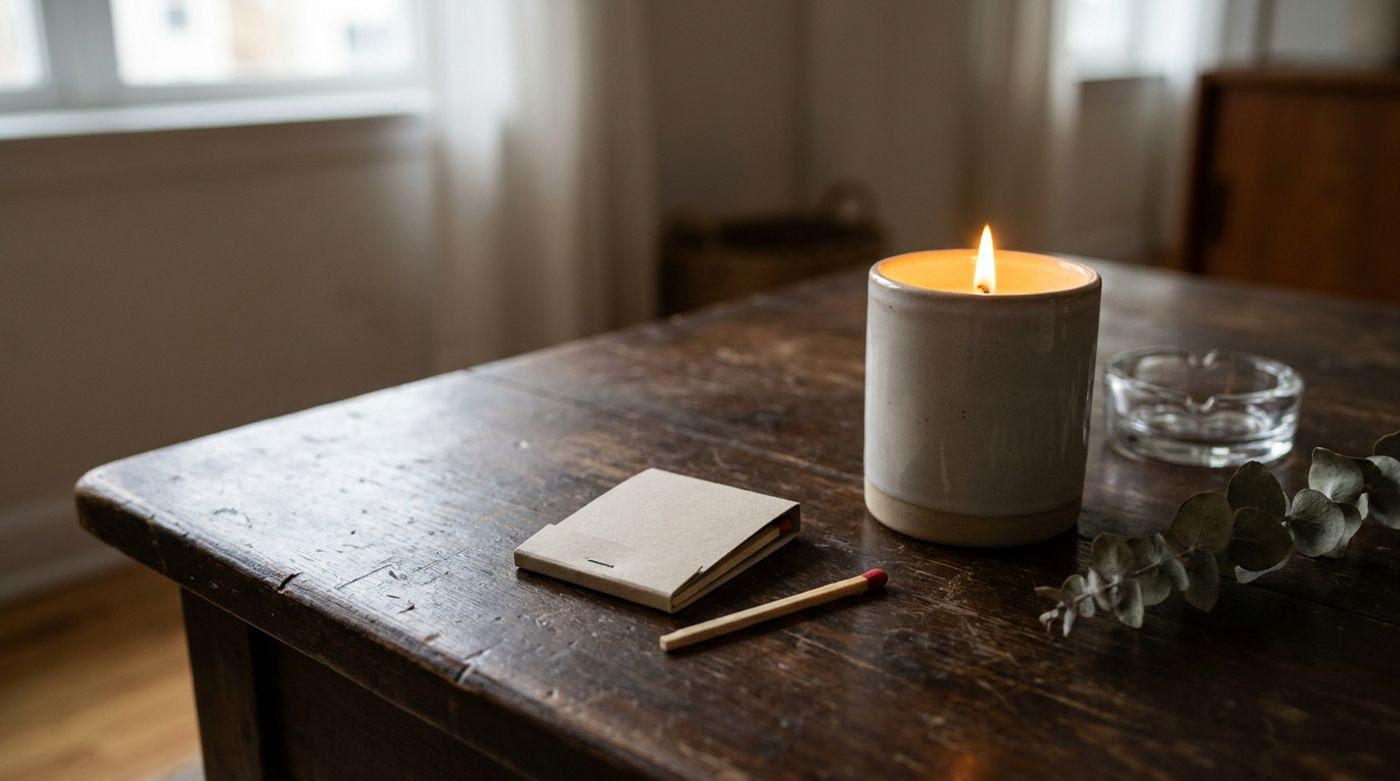
Promotional matches are one of the most enduring and versatile giveaways in the promotional products industry. Unlike many items that get tucked into a drawer and forgotten, a box of matches often stays within arm's reach, whether on a kitchen counter, in a desk drawer, or beside a candle in the living room. For businesses, that staying power translates into repeated brand exposure every time the box is picked up. Marketing directors, HR directors, and small-business owners all have good reasons to consider custom matches for their next campaign or event.
The appeal is practical. Matches are lightweight, easy to mail or hand out, and available in a range of formats from small matchbooks to larger matchboxes. They work as standalone giveaways or as complements to other promotional items like branded candles or grilling accessories. Because decoration options are flexible, a company can keep the design simple with a one-color logo or go bold with full-color artwork that matches a campaign theme.
This buyer's guide walks through the key considerations for ordering promotional matches in bulk. It covers who uses them and why, what to look for in quality and safety, how decoration methods affect the final product, and how to plan quantities and lead times. It also highlights common mistakes that can slow down an order or weaken the impact of the giveaway. By the end, you should have a clear picture of how to choose custom matches that fit your audience and your brand.
Who Orders Promotional Matches and Why They Work
Promotional matches serve a wide range of businesses and organizations, and the reasons for ordering them vary by industry. Restaurants, bars, and breweries are among the most frequent buyers. A branded matchbox or matchbook placed near the register or included with a to-go order gives customers a tangible reminder of the establishment. For hospitality businesses, matches also fit naturally with the ambiance of a candlelit table or a fireplace lounge. Hotels and bed-and-breakfasts often place custom matches in guest rooms or welcome packets, where they serve as both a practical amenity and a subtle marketing tool.
Marketing directors frequently include promotional matches in trade show giveaways and client gift packages. At a trade show, matches are small enough to fit in a pocket or bag, which increases the likelihood that attendees will take them. They can be paired with other items in a themed gift set, such as a branded candle or a bottle opener, to create a cohesive promotional kit. For client giveaways, custom matches add a personal touch when packaged with a note or a small gourmet item. The low unit cost of matches makes it possible to include them in larger gift programs without stretching the budget.
HR directors and safety managers may also find uses for promotional matches in employee appreciation and safety programs. Custom matches can be included in welcome kits for new hires, especially in industries like hospitality or food service where employees may interact with customers who appreciate a small token. Safety managers, meanwhile, need to be mindful of where matches are appropriate. In workplace safety programs, matches are generally not suitable for environments with flammable materials or strict fire codes. However, they can be used in corporate gift packages for office-based employees or as part of a branded outdoor recreation kit for companies that encourage team building and outdoor activities.
Small-business owners often turn to promotional matches as an affordable way to reinforce their brand at local events, farmers markets, and community festivals. A real estate agent might hand out custom matchbooks at an open house, while a wedding planner could include them in a vendor welcome bag. The key is to match the giveaway to the setting. Matches work best in contexts where they are useful and where the brand message has a chance to be seen repeatedly. Because minimum order quantities vary by product and are listed on each item page, small businesses can often start with a manageable order and scale up as their needs grow.
Beyond the immediate giveaway, promotional matches can support longer-term marketing goals. A box of matches kept in a kitchen drawer may be used for months, giving the brand ongoing visibility. This is especially valuable for local service businesses that rely on repeat customers and word-of-mouth referrals. When a customer uses a branded matchbox, they are reminded of the business each time, which can influence future purchasing decisions. For organizations with a strong local presence, custom matches can become a small but meaningful part of the overall brand experience.
- Restaurants, bars, and breweries use matches as tabletop giveaways and to-go order extras.
- Hotels and inns place custom matches in guest rooms and welcome packets.
- Marketing teams include matches in trade show bags and client gift sets.
- Small businesses use matches at local events and community festivals.
What to Look For in Quality and Safety
Quality and safety are the two most important factors when choosing promotional matches. The last thing a business wants is a giveaway that fails to light or, worse, poses a safety risk. Start by considering the match head and stick. Standard wooden matches with a sturdy stick and a well-formed head are generally more reliable than flimsy alternatives. The striking surface on the box or matchbook should be consistent and durable enough to light the match without excessive force. If the striking surface wears out quickly, the matches become useless, and the brand impression turns negative.
Safety considerations extend to the packaging. Matchbooks and matchboxes should be constructed from sturdy paperboard that keeps the matches secure and protects the heads from accidental friction. Look for boxes with a tight-fitting cover or a fold-over flap that stays closed. For matchbooks, check that the matches are held firmly in place and that the striking surface is clearly marked. Some buyers prefer matches with a safety feature such as a double-fold cover or a child-resistant closure, especially if the matches will be distributed in environments where children may be present.
Compliance with safety regulations is another factor. In the United States, promotional matches should meet applicable Consumer Product Safety Commission requirements for matchbooks and matchboxes. Reputable suppliers will be able to confirm that their products comply with these standards. Safety managers in particular should verify that the matches are intended for promotional use and that they are stored and distributed appropriately. If matches are included in gift packages that will be shipped, check with the carrier about any restrictions on shipping flammable items. In many cases, matches can be shipped, but proper labeling and packaging are required.
Material quality also affects the overall look and feel of the giveaway. A matchbox with a smooth, well-printed cover feels more premium than one with flimsy paper and uneven printing. The paperboard should be thick enough to resist bending and tearing during normal use. The matches themselves should be straight and free of defects. If the matches are intended for use with candles or fireplaces, consider the length of the stick. Longer matches offer more safety and convenience for reaching into deep candle jars or fireplaces. Standard matchbooks are fine for general use, but specialty matches may be a better fit for certain audiences.
Finally, consider the environmental impact of the materials. Many buyers now prefer matches made from responsibly sourced wood and packaging printed with soy-based inks. Some suppliers offer recycled paperboard options for the boxes. While these details may not be visible to the end user, they can support a company's sustainability goals and provide a talking point for marketing. When requesting samples or quotes, ask about the materials used and whether more environmentally friendly options are available. This is especially relevant for businesses that promote their eco-friendly practices.
Decoration Options for Custom Matches
Decoration is where promotional matches truly become a branding tool. The most common method for matchboxes and matchbooks is offset printing, which allows for full-color artwork and fine detail. This is ideal for companies with complex logos or multi-color designs. Offset printing produces sharp, vibrant images that hold up well on paperboard. For simpler designs, screen printing can be a cost-effective alternative, especially for one- or two-color logos. Screen printing lays down a thick layer of ink that stands out on the box surface, though it may not capture fine gradients or photographic images.
Pad printing is another option, particularly for smaller matchboxes or specialty shapes. It works well for printing on curved or uneven surfaces, though matchboxes are generally flat enough that offset or screen printing is more common. Laser engraving is less typical for matches because the paperboard and wood materials do not lend themselves to engraving the same way metal or wood products do. However, some suppliers offer engraved wooden matchboxes for a premium look. These are often used for high-end client giveaways or corporate milestones.
Full-color heat transfer is a decoration method more commonly associated with textiles, but it can also be used on certain promotional items. For matches, the most practical approach is to focus on the printing method that best suits the artwork and the budget. When preparing artwork, keep in mind that the printable area on a matchbox is limited. Simple, bold designs with a clear logo and a short tagline tend to work best. Avoid tiny text or intricate details that may become illegible at a small size. A common mistake is trying to cram too much information onto the box, which can make the design look cluttered and reduce brand recall.
The striking surface itself can be a design element. Some matchboxes feature a printed striking surface with a pattern or logo, while others keep it plain. If the striking surface is printed, make sure the ink does not interfere with the match's ability to strike. Suppliers should be able to advise on this. Another option is to print on the inside of the matchbook cover, which provides additional space for a message, a website address, or a QR code. This can be a useful way to extend the brand message beyond the exterior.
For businesses that want a cohesive look across multiple promotional items, custom matches can be decorated to match the color palette and style of other giveaways. For example, a restaurant that uses branded napkins and coasters can order matches with the same logo and color scheme. This consistency reinforces the brand identity and creates a more polished impression. When ordering, request a digital proof or a physical sample to check color accuracy and print quality. A small investment in proofing can prevent costly mistakes on a bulk order.
- Offset printing for full-color logos and detailed artwork.
- Screen printing for simple, bold one- or two-color designs.
- Inside-cover printing for additional messaging or QR codes.
- Engraved wooden matchboxes for premium client giveaways.
Quantities, Lead Times, and Mistakes to Avoid
Planning quantities for promotional matches requires a realistic estimate of how many you will distribute and over what period. Because minimum order quantities vary by product and are shown on each item page, there is no single number that applies across the board. Start by mapping out the events, campaigns, or gift programs where the matches will be used. If you are ordering for a trade show, estimate attendance and the percentage of attendees likely to take a giveaway. For restaurant giveaways, consider how many customers you serve in a month and how many will take a matchbox. Ordering slightly more than you need is usually wise, as running out mid-event can be awkward, but over-ordering ties up storage space and budget.
Lead times for custom matches depend on the decoration method, the complexity of the artwork, and the supplier's production schedule. Simple screen-printed designs on standard matchboxes typically have shorter lead times than full-color offset printing with custom packaging. Always ask for a production timeline when requesting a quote, and build in a buffer for proof approval and shipping. If you have a hard deadline, such as a trade show date or a holiday gift delivery, communicate that to your supplier upfront. Rush options may be available, but they can affect the overall cost and should be discussed early.
One common mistake is neglecting to request a physical sample before placing a bulk order. Digital proofs are helpful, but they cannot show the true color, paper texture, or match quality. A physical sample allows you to check the striking surface, the fit of the box, and the overall feel of the product. Another mistake is choosing a decoration method that does not suit the artwork. For example, a detailed logo with many colors may not reproduce well with screen printing. Work with your supplier to select the method that will best represent your brand.
Storage and distribution are also worth planning. Matches should be stored in a cool, dry place away from direct sunlight and heat sources. If you are distributing them at an outdoor event, keep them in a shaded area and avoid leaving them in a hot vehicle. For safety managers, it is important to communicate any storage guidelines to the team handling the giveaways. If matches are included in gift packages that will be shipped, verify that the packaging meets carrier requirements and that the matches are secured properly.
Finally, avoid the temptation to treat matches as an afterthought. The design, quality, and distribution plan all contribute to the giveaway's effectiveness. A well-made custom matchbox with a clear logo and a thoughtful distribution strategy can generate goodwill and repeated brand exposure. A poorly made or poorly planned giveaway can have the opposite effect. Take the time to choose a reputable supplier, review samples, and plan your order around your actual needs. With the right approach, promotional matches can be a small but powerful part of your marketing mix.
Recommended Promotional Matches
 Perfect Imprints
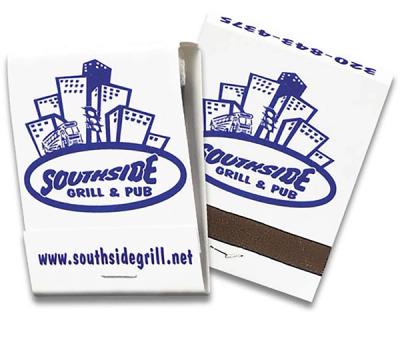
20 Stem Matchbooks Red Logo White
 Perfect Imprints
20 Stem Matchbooks Blue Logo on White
 Perfect Imprints
20 Stem Matchbooks - Black Logo on Red
 Perfect Imprints
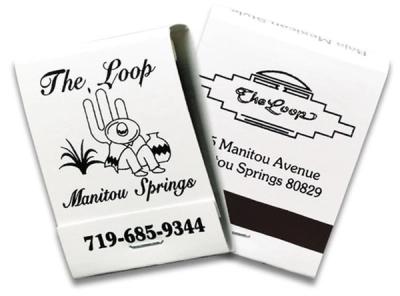
20 Stem Matchbooks Black Logo on White
 Perfect Imprints
20 Stem Matchbooks Green Logo on White
 Perfect Imprints
20 Stem Matchbooks Purple Logo on White
 Perfect ImprintsNEW
Low Quantity Full-Color Custom 20 Stem Matchbooks
 Perfect Imprints
20 Stem Match Books Red Logo on Black
Get Help With Promotional Matches!
Order promotional matches can be confusing with the many choices and the extended production times. Contact us today with specifics of what you'd like and we'll reply back with answers faster than you can light a match.
See Related Blogs About Promotional Product Ideas
Are Custom Koozies Still Worth Ordering in Bulk?
Custom koozies remain one of the most cost-effective giveaways for trade shows, employee appreciation, and safety programs. Learn who orders them, what decoration methods work best, and how to plan a bulk order that gets used instead of tossed.
What Are Imprinted Promotional Products and How Do Buyers Use Them?
Imprinted promotional products are branded items companies order in bulk to support marketing, HR, and safety goals. This guide covers practical uses, creative giveaway ideas, and how to order.
Custom Flying Discs: A Buyer's Guide for Promotional Orders
Custom flying discs are a low-cost, high-visibility giveaway for trade shows, employee appreciation, and safety programs. This buyer's guide covers materials, decoration methods, minimums, and lead times so you can order with confidence.
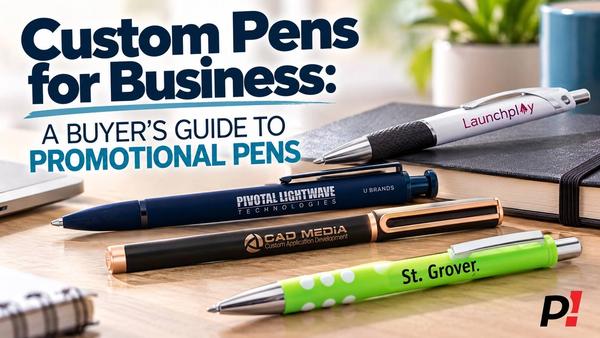
Custom Pens for Business: A Buyer's Guide to Promotional Pens
Custom pens remain one of the most practical promotional products for any organization. This buyer's guide covers use cases, materials, decoration methods, and ordering tips for bulk custom pens.
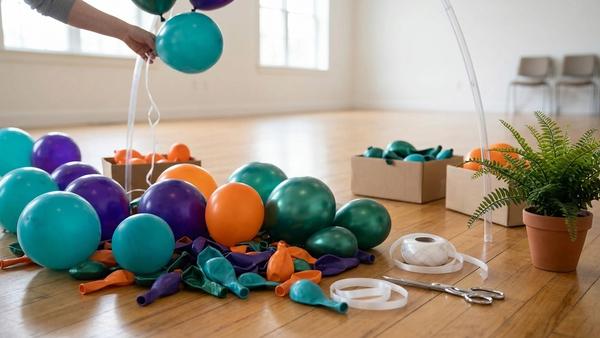
Custom Balloons on a Budget: A Buyer's Guide for Bulk Orders
Custom balloons cheap enough for a full campaign still need the right material, ink, and quantity. This buyer's guide walks through bulk pricing factors, decoration methods, and lead times so you can order with confidence.
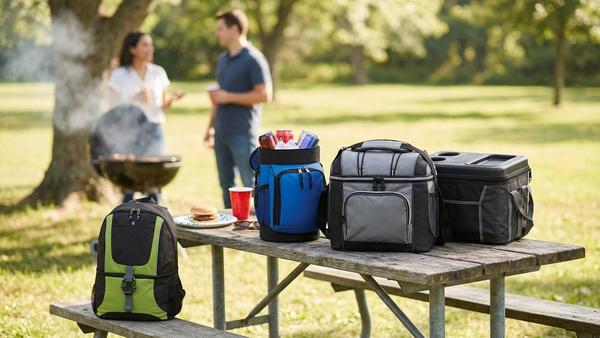
11 Ways Custom Coolers Boost Brand Recall and Team Morale
Custom coolers keep your logo in front of clients, crews, and employees for years. See 11 practical ways marketing, HR, and safety teams put branded coolers to work.
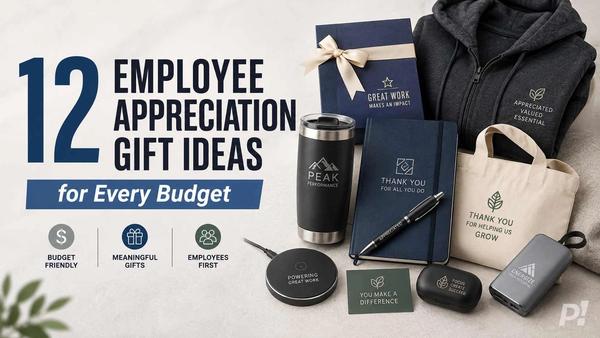
12 Employee Appreciation Gift Ideas for Every Budget
Looking for employee appreciation gift ideas that fit any budget? This list of 12 bulk promotional gifts covers everything from custom water bottles to tech accessories, helping you show gratitude without breaking the bank.