Are Promotional Caps Good for Trade Shows?
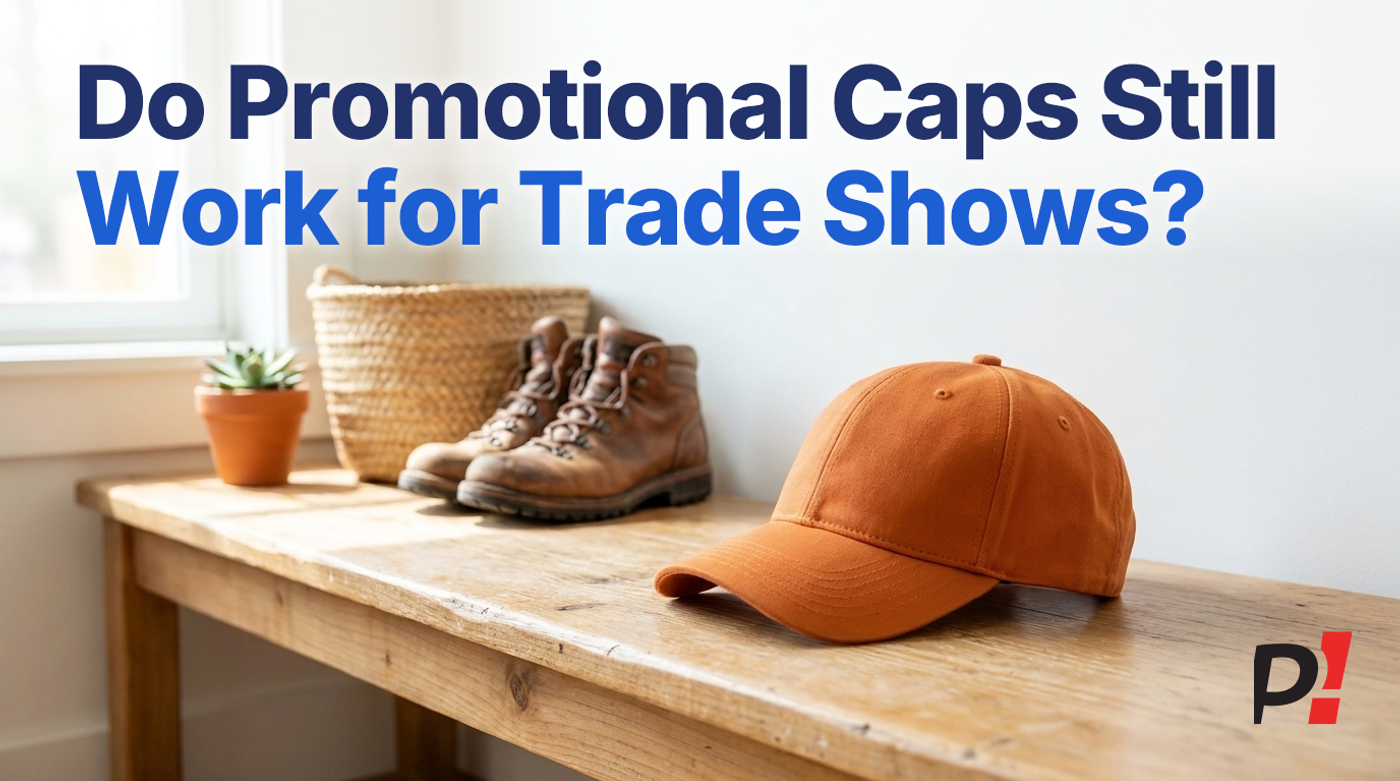
Yes. Promotional caps are great for trade shows, and for many exhibitors they remain the single most reliable giveaway on the table. The reason is simple: a branded cap is worn, not filed away. A logo-printed cap leaves the booth on someone's head, rides public transit, shows up at the gym and the job site, and keeps advertising long after the booth is packed. For a marketing director measuring cost per impression, that is a hard number to beat.
The catch is that caps only work when they are ordered like a program, not like an afterthought. The style has to fit the audience, the decoration has to survive repeated wear and washing, and the quantity has to match the traffic the booth actually sees. Buyers who treat promotional caps as a commodity and pick the cheapest option usually watch them end up in a hotel trash can.
This post answers the trade show question directly, then covers what a buyer needs to act on it: who caps work for, what changes the answer from show to show, and how to order bulk custom caps so the giveaway pays for itself in impressions. Minimums vary by product and are shown on each item, and every order is quoted, so the guidance here stays practical rather than priced.
Why Promotional Caps Still Earn Their Place at Trade Shows
The first reason is wear time. A custom cap is one of the few giveaways that a stranger will put on in public within minutes of receiving it. Pens get pocketed, totes get folded into luggage, and drinkware gets left in the hotel room, but a cap goes on the head. That means your logo starts working on the show floor and keeps working for months, which is why promotional caps consistently rank among the highest-impression items in a trade show budget.
The second reason is fit. Trade show audiences are broad, and caps are one of the few products that work across nearly every demographic in the room. A screen-printed cap in a neutral color suits a facilities manager, a marketing coordinator, and a contractor walking the same aisle. That versatility lets an exhibitor order one strong style in bulk rather than splitting a budget across several niche giveaways that each reach a smaller slice of the crowd.
The third reason is perceived value. A well-made branded cap feels like a real gift rather than a trinket. When a booth visitor receives a structured cap with clean embroidery, the interaction feels more like a thank-you and less like a handout. That matters at shows where attendees are collecting items from dozens of booths and deciding which ones to keep. A cap that looks and feels substantial earns a spot in the bag and then on the head.
The fourth reason is decoration quality. Modern decoration methods hold up. Embroidery on a mid-weight cap survives repeated washing and sun exposure, and full-color heat transfer puts detailed logos on caps that screen printing cannot handle. That durability is what turns a one-day giveaway into a multi-month billboard. Buyers who specify the right decoration method get a cap that still looks sharp at the next trade show season.
The fifth reason is targeting. Promotional caps can be ordered in colorways that match a booth theme, a brand palette, or a specific event. A safety manager ordering for an industry expo can choose high-visibility colors that double as worksite gear. A software company can order a clean, low-profile cap that fits a casual tech audience. That flexibility is why caps keep showing up in trade show plans year after year, even as other giveaway categories fall in and out of fashion.
None of this happens automatically. A cap ordered in the wrong style, with a decoration that peels after three washes, or in a quantity that runs out by noon on day one will not deliver these results. The value comes from treating promotional caps as a planned program with a clear audience, a decoration method chosen for durability, and a quantity matched to booth traffic.
- Worn in public immediately, so the logo starts working on the show floor
- One style fits a wide range of attendee demographics
- Perceived value high enough that recipients keep and wear the item
- Embroidery and heat transfer survive repeated washing and sun
- Colorways and styles can match a booth theme or brand palette
Which Businesses and Organizations Get the Most From Branded Caps
Marketing directors are the most obvious buyers, and for good reason. Branded caps are a staple of trade show booths, customer appreciation events, and product launches. A marketing team can order custom caps in a brand colorway, pair them with a QR code on the hang tag, and track redemptions to see which events drove the most engagement. Because caps are worn repeatedly, they also generate organic impressions that a one-time mailer cannot match.
HR directors use promotional caps in onboarding kits, employee appreciation programs, and company stores. A new hire who receives a branded cap on day one gets a small but tangible signal that they are part of the team. HR teams also order caps for volunteer days, wellness walks, and anniversary celebrations. Because these orders often need to cover a whole workforce, HR buyers tend to order in bulk and appreciate a supplier who can handle multiple decoration methods in one run.
Safety managers are a less obvious but very strong buyer group. High-visibility caps and hard-hat-compatible styles are standard issue on job sites, and a logo-printed cap reinforces a safety program every time it is worn. Safety managers often order custom caps alongside safety incentives, near-miss rewards, and toolbox-talk giveaways. The cap becomes a walking reminder of the program, and because it is worn daily, it delivers impressions that a poster in the break room never will.
Small-business owners use promotional caps as a low-friction way to look established. A landscaping company, a brewery, a gym, or a coffee roaster can order branded caps for staff uniforms and retail shelves at the same time. For a small business, a cap on an employee's head is local advertising that reaches neighbors, customers, and passersby every day. These buyers often start with a single style and reorder as the business grows.
Beyond those four groups, schools and booster clubs order caps for fundraisers and spirit wear, nonprofits order them for walk-a-thons and volunteer crews, and event organizers order them for races and festivals. Each of these buyers has a different reason for ordering, but they share the same need: a cap that fits the audience, holds up to wear, and arrives on schedule.
The common thread is that all of these buyers order in bulk and care about consistency. A marketing director cannot afford a cap that fades after two washes, and a safety manager cannot afford a style that does not fit under a hard hat. That is why the buyer conversation should start with the use case, not the price. The right promotional caps for a job site are not the same as the right caps for a tech expo, and a supplier who understands that difference will steer the order toward a style that actually gets worn.
What Changes the Answer From One Show to the Next
The trade show answer is yes, but the details change with the event. A regional chamber mixer with a few hundred attendees calls for a different cap program than a national industry expo with tens of thousands of visitors. The first step is estimating booth traffic and deciding how many caps the booth can responsibly hand out. Ordering too few means the giveaway ends early and late visitors leave empty-handed. Ordering too many means leftover inventory that ties up budget and storage space.
Audience matters as much as volume. A construction expo rewards high-visibility caps, structured front panels, and durable embroidery. A tech conference rewards low-profile caps, muted colorways, and clean tonal logos. A healthcare recruiting fair may favor softer fabrics and adjustable closures that suit a wide range of wearers. The style should signal that the exhibitor understands the room, because a cap that looks out of place gets left in the bag.
Decoration method is the next variable. Embroidery is the default for a reason: it is durable, looks premium, and handles most logo shapes well. Screen printing works for bold, simple graphics and can cover larger areas at a lower complexity. Pad printing suits small, detailed marks on structured fronts. Full-color heat transfer is the choice when a logo has gradients, fine text, or photographic elements. Laser engraving on performance materials gives a modern, tonal look. Each method has a different feel, and the right one depends on the logo and the audience.
Fabric and construction change the answer too. Cotton twill is the workhorse for everyday caps, while performance polyester suits athletic and outdoor audiences. Structured caps hold their shape and read as more formal, while unstructured caps feel casual and pack flat for travel. Adjustable closures fit more wearers, which matters at a show where the booth cannot stock every size. A buyer who specifies fabric and construction up front avoids a reorder later.
Lead time is the variable that trips up the most exhibitors. Custom caps are decorated to order, and decoration capacity tightens in the weeks before major trade shows. A buyer who starts the conversation well before the show date has room to request samples, approve a proof, and absorb a production schedule. A buyer who waits until the last minute pays for rush options or accepts whatever is in stock. The calendar is part of the order, not an afterthought.
Finally, the giveaway mechanic changes the answer. A cap handed out freely draws a different crowd than a cap earned through a demo, a survey, or a badge scan. Some exhibitors use promotional caps as a VIP gift for qualified leads, which justifies a higher-end style in smaller quantities. Others use them as a broad traffic driver, which favors a durable but simpler cap in larger quantities. Deciding the mechanic first makes the style, decoration, and quantity decisions much easier.
- Booth traffic estimate and how many caps the booth can hand out
- Audience: construction, tech, healthcare, outdoor, or general business
- Decoration method: embroidery, screen print, pad print, heat transfer, or laser engraving
- Fabric and construction: cotton twill, performance polyester, structured or unstructured
- Lead time and show date, including proof approval and production scheduling
- Giveaway mechanic: free handout, lead-qualified gift, or VIP thank-you
How to Order Bulk Custom Caps for a Trade Show
Start with the show date and work backward. Custom caps are decorated to order, so the production calendar should include time for a sample, a digital proof, and approval before the run begins. Buyers who build in that buffer avoid rush charges and last-minute substitutions. Minimum order quantities vary by product and are shown on each item, so the first step is to confirm the style you want and its minimum before finalizing the budget.
Choose the style before the decoration. A low-profile cap and a structured cap take decoration differently, and a logo that looks sharp on one may crowd the other. Request a sample or a virtual proof on the actual cap style rather than approving a logo on a flat mockup. This is especially important for embroidery, where stitch density and thread color affect how the logo reads at a distance.
Match the decoration to the logo and the audience. Simple, bold logos work well in screen print or embroidery. Detailed marks with fine text or gradients need full-color heat transfer. Performance caps with tonal branding often look best with laser engraving or a subtle embroidered mark. The goal is a cap that looks intentional, not a cap that looks like a logo was stamped on as an afterthought.
Order for the whole program, not just the show. Many buyers pair a trade show order with employee appreciation caps, company store inventory, and client gifts in the same run. Combining those needs into one order often simplifies decoration approvals and keeps the brand consistent across every touchpoint. It also means leftover show inventory has a home rather than sitting in a closet.
Plan the handout. A cap that is handed out with a hang tag, a QR code, or a short conversation about the product feels more valuable than a cap pulled from a bin. Some exhibitors ask for a badge scan or a quick survey before handing over a cap, which turns the giveaway into a lead capture tool. Others keep a separate stash of higher-end caps for qualified prospects. Either way, the handout plan should be settled before the show floor opens.
Finally, confirm the logistics. Ask about packaging, shipping to the venue, and whether the caps will arrive pre-assembled or flat. Confirm the decoration placement on the front, side, or back, and get the proof in writing. A supplier who answers these questions clearly before the order is placed is a supplier who will deliver a cap your booth visitors actually want to wear.
- Confirm the show date and build a production calendar backward from it
- Request a sample or virtual proof on the actual cap style
- Match decoration method to logo complexity and audience
- Combine trade show, employee, and client needs into one order
- Decide the handout mechanic and lead capture plan
- Confirm packaging, shipping, and decoration placement in writing
Recommended Promotional Caps for Trade Shows

Price Buster Cap
Item # 525630

Foam Trucker Cap
Item # 527537

Rainbow Trucker Cap
Item # 522530
 Richardson
 Trucker Cap
Item # 529240

Kati Breakup 8" Knit Cap
Item # 519125
 New Era
® Stretch Mesh Cap
Item # 529315

All-Around Unstructured Cap
Item # 505486
Order Custom Promotional Product Ideas Today
Our team can help you pick the right product, decoration, and quantity for your project. Reach out and we’ll send tailored ideas — usually within one business day.
See Related Blogs About Promotional Product Ideas
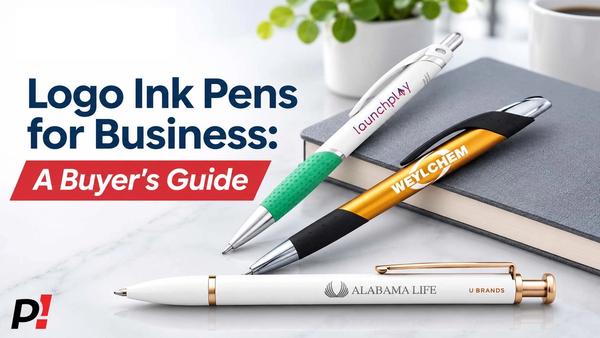
Logo Ink Pens for Business: A Buyer's Guide to Bulk Orders
Logo ink pens are a workhorse promotional item for trade shows, employee appreciation, and safety programs. This buyer's guide covers barrel materials, ink types, decoration methods, minimums, and lead times so you can order with confidence.
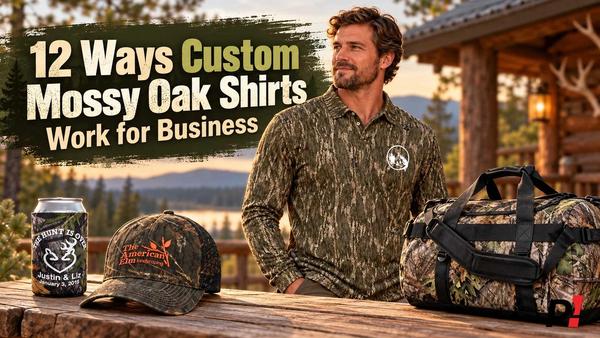
12 Ways Custom Mossy Oak Shirts Work for Business
Custom Mossy Oak shirts give your logo a backdrop that outdoor-minded customers and employees already trust. Here are 12 practical ways marketing directors, HR teams, safety managers, and small-business owners put branded camo to work.
Engraved Pens for Business: A Buyer's Guide
Engraved pens give your logo a permanent, professional look that lasts for years. This buyer's guide covers materials, decoration methods, minimums, lead times, and creative giveaway ideas for bulk orders.
Custom Imprint Promotional Products: A Buyer's Guide
Custom imprint promotional products put your logo in customers' hands. This buyer's guide covers use cases, decoration methods, quality checks, and lead times so you can order with confidence.
Custom Diner Mugs: A Buyer's Guide for Bulk Orders
Custom diner mugs bring a classic American feel to your next promotion. This buyer's guide covers decoration methods, quality checks, and planning tips for bulk orders.
Do Custom Acrylic Tumblers Make Sense for Bulk Orders?
Custom acrylic tumblers are a practical, lightweight option for bulk promotional orders. Learn how decoration methods, minimums, and use cases affect your order so you can plan a giveaway that works.
How Fast Can Rush Promotional Products Ship?
Rush promotional products can ship faster than standard orders when you choose in-stock items and simple decoration. Here is how rush production works, who it fits, and how to order bulk branded gear for a tight deadline.
What Are Custom Noise Makers Used For at Events?
Custom noise makers turn up the volume at trade shows, pep rallies, and safety events. This buyer's guide covers practical uses, creative giveaway ideas, and how to order bulk logo noise makers with confidence.