Custom Shaker Bottles for Gyms, Teams, and Events: A Buyer's Guide
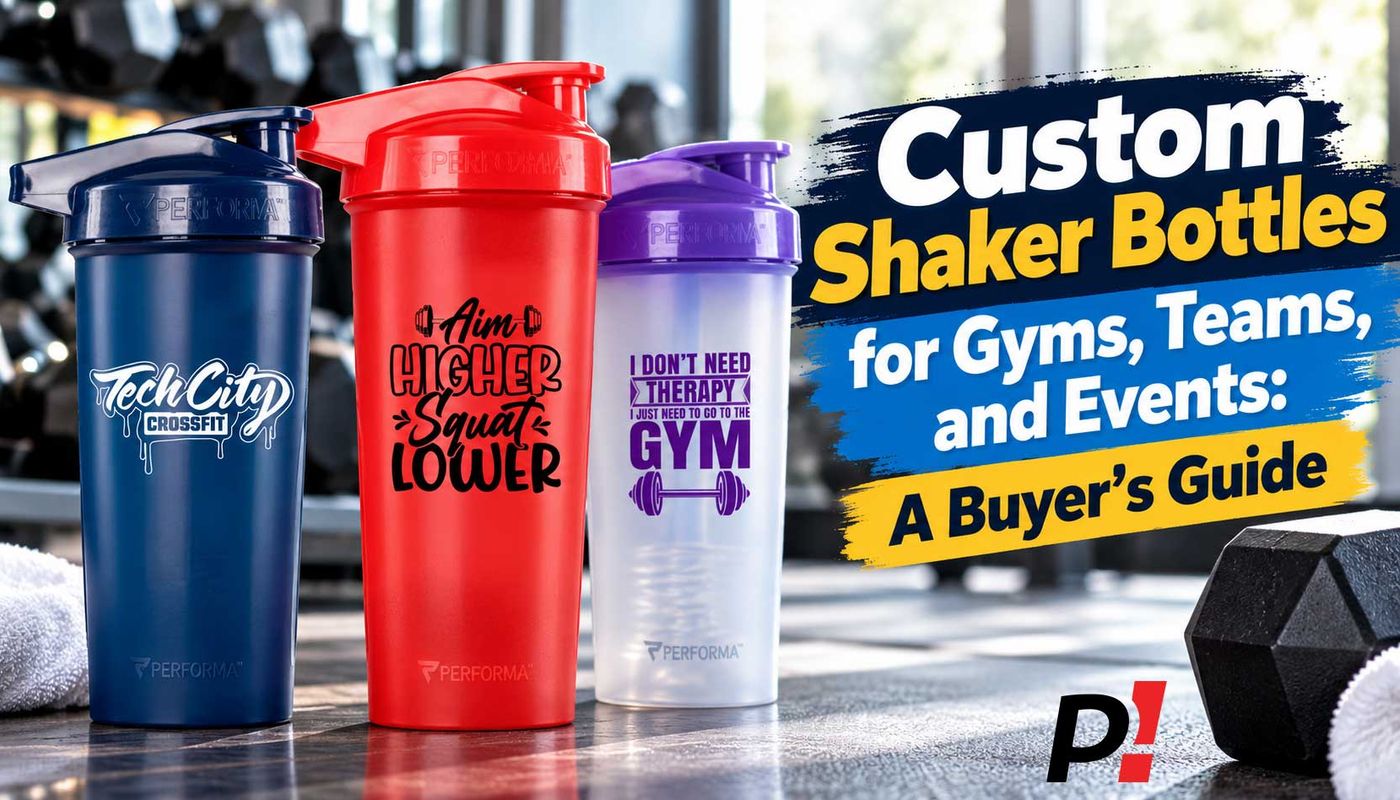
Custom shaker bottles occupy a useful middle ground in the promotional products world. They are more substantial than a branded wristband and more practical than a logoed stress ball, and they get used several times a day by anyone who lifts, runs, or mixes a protein shake. For marketing directors, HR directors, safety managers, and small-business owners, that daily repetition is the whole point: a shaker bottle that sits on a desk or in a gym bag keeps your logo in view long after a trade show ends.
Shaker bottles are also one of the few promotional items that customers actively ask for. Athletes and gym-goers buy them, teams hand them out at registration, and wellness committees include them in employee appreciation kits. Because the product is familiar, buyers often assume ordering is simple. In practice, there are real decisions to make about bottle material, lid and mixing mechanism, decoration method, and timing, and those choices affect how the finished piece looks and how long it lasts.
This buyer's guide walks through the considerations in the order most buyers face them: what the bottles are for and who orders them, what to look for before you commit, how materials and construction affect quality, and how decoration, quantities, and lead times shape the final order. It is written for bulk buyers placing orders through a distributor, not for someone picking up a single bottle at a retail store.
Who Orders Custom Shaker Bottles and What They Use Them For
The first question in any promotional order is not which bottle to pick but what job the bottle has to do. Custom shaker bottles show up in a surprisingly wide range of programs, and the intended use should drive every other decision. A marketing director handing bottles out at a fitness expo needs a product that photographs well and survives a weekend in a tote bag. An HR director building an employee wellness kit needs something durable enough for daily use and neutral enough to suit a mixed workforce. A safety manager ordering for a hot-weather job site needs a bottle that holds up to repeated washing and rough handling. A small-business owner buying for a gym partnership or a customer appreciation event needs a clean, professional look on a manageable timeline.
Gyms and fitness studios are the most obvious buyers, and they tend to order branded shaker bottles as new-member gifts, class milestone rewards, and retail items for a front-desk display. Sports teams and youth athletic programs use personalized shaker bottles as registration gifts, end-of-season awards, and fundraising sale items, often with a team name and number in addition to a sponsor logo. Corporate wellness programs order promotional shaker bottles for step challenges, weight-loss competitions, and health fairs, sometimes paired with a branded towel or resistance band. Nutrition shops, supplement retailers, and meal-prep services use wholesale shaker bottles as purchase-with-purchase add-ons and loyalty rewards.
Colleges and universities order custom shaker bottles for recreation centers, intramural leagues, and orientation welcome kits. Military and first-responder units order them for physical training and morale events. Construction and industrial safety managers order bulk shaker bottles for heat-illness prevention programs, often alongside branded water bottles and cooling towels. Event organizers use them as race packet inclusions for 5Ks, triathlons, and obstacle races, where a bottle with a race logo becomes a keepsake. Real estate offices, car dealerships, and banks order logo shaker bottles as client gifts for customers who are visibly active.
What these buyers share is a need for a product that feels worth keeping. A cheap shaker bottle with a lid that leaks or a mixing ball that rattles gets thrown in a drawer. A well-chosen one gets used at the gym, at the office, and on the road, which is exactly the repeated exposure that makes promotional products work. That is why the buyer's first job is to define the use case clearly: daily gym use, event giveaway, employee kit, or retail resale. Each points toward different materials, lid styles, and decoration methods, and getting that definition right early saves revisions later.
- Gyms and fitness studios: new-member gifts, class rewards, front-desk retail
- Sports teams and leagues: registration gifts, awards, fundraiser sales
- Corporate wellness and HR: health fairs, step challenges, appreciation kits
- Safety and industrial programs: heat-illness prevention, jobsite hydration
- Events and races: packet inclusions, sponsor giveaways, participant keepsakes
- Nutrition and supplement retailers: loyalty rewards, add-on purchases
What to Look for Before You Commit to a Shaker Bottle Order
Once the use case is clear, the next step is narrowing the field. Start with the lid and mixing mechanism, because that is where most shaker bottles succeed or fail. A screw-on lid with a flip-top cap and a secure gasket is the baseline for leak resistance. A snap lid is faster to open but more prone to popping in a gym bag. Mixing systems fall into a few categories: a wire whisk ball, a plastic mixing grid, or a simple vortex-inducing interior. Whisk balls are effective for protein powder but can be noisy and are easy to lose. Mixing grids are quieter and stay attached to the lid. For buyers ordering for a broad audience, a grid or a combination system tends to be the safer choice.
Bottle material is the next decision. Plastic shaker bottles, usually made from Tritan or a similar BPA-free copolyester, are lightweight, shatter-resistant, and the most common choice for promotional orders. Stainless steel shaker bottles cost more but insulate, resist odors, and feel more premium, which suits client gifts and higher-end wellness programs. Glass shaker bottles exist but are a poor fit for gym and event giveaways because of breakage risk. Ask about dishwasher safety, because a bottle that has to be hand-washed will get used less. Also check whether the bottle is microwave safe, though most shaker bottles are not and should not be marketed as such.
Capacity matters more than buyers expect. A smaller bottle suits light use and travel, while a larger one is better for full protein shakes and long workouts. Consider whether the bottle needs to fit a standard car cup holder, a gym bag side pocket, or a backpack sleeve. Measurement markings are a small feature that athletes notice, and they add perceived value at little cost. Lid color and bottle color combinations give you a way to match brand colors without paying for full-wrap decoration.
Finally, think about the decoration surface. Curved bottles are not flat billboards, and a logo that wraps too far around the curve will distort. A clean, centered imprint on one side is usually the strongest choice. If you want a full-color design, confirm the decoration method can hold fine detail on the bottle's finish. Buyers who skip this step sometimes approve a proof that looks great flat and disappointing on a curved, glossy surface. Ask for a sample or a pre-production proof whenever the design is complex.
- Lid type: screw-on with flip cap and gasket for leak resistance
- Mixing system: grid or combination for quiet, reliable mixing
- Material: BPA-free plastic for volume, stainless steel for premium gifts
- Capacity and fit: cup holder, gym bag pocket, measurement markings
- Care: dishwasher-safe parts and easy-to-clean lid
- Decoration surface: centered imprint that reads well on a curve
Materials, Construction, and Decoration Options That Hold Up
Quality in a shaker bottle comes down to a few visible and invisible details. On the visible side, check wall thickness, lid threading, and the finish of the bottle's opening. A bottle with rough threads will cross-thread and leak. A thin wall flexes when squeezed and can crack at the base. On the invisible side, ask about the plastic resin and whether it is BPA-free, and ask how the lid gasket is seated. A gasket that falls out during washing is a common complaint in low-cost bottles. Stainless steel options should be double-wall vacuum insulated if insulation is the selling point, and the lid should be designed for that bottle rather than borrowed from a plastic model.
Decoration is where promotional shaker bottles become branded shaker bottles, and the method should match the material and the design. Screen printing is the workhorse for one- and two-color logos on plastic bottles. It is durable, cost-effective at volume, and produces crisp edges on simple marks. Pad printing handles smaller or more detailed imprints and works well on curved surfaces and on lids. Laser engraving is a strong fit for stainless steel, where it produces a permanent, tonal mark that will not peel or fade. Full-color heat transfer or digital decoration lets you reproduce multi-color logos and gradients, which matters for brands with detailed marks or photographic elements.
For personalized shaker bottles, such as team bottles with names and numbers, decoration may involve individual personalization rather than a single run. That changes the production process and the timeline, so raise it early. Embroidery does not apply to bottles, but it does apply to the gym towels and drawstring bags that often accompany a shaker bottle order, so a coordinated kit may use more than one decoration method. Wraparound labels and decals are an option for short runs or temporary campaigns, though they are less durable than direct decoration.
Color choice deserves a moment. Bottles in brand colors with a contrasting lid look intentional, while a bottle that clashes with the lid color looks like a closeout. If your brand palette is limited, ask which stock bottle and lid colors are available before designing. For multi-piece orders, keep the decoration consistent across items so the kit reads as one program. And always ask what the decoration looks like after repeated washing. Direct screen printing and laser engraving hold up well; some transfers and decals do not. A distributor can tell you which methods are recommended for the specific bottle you choose.
- Screen printing: durable one- and two-color logos on plastic bottles
- Pad printing: fine detail on curved surfaces and lids
- Laser engraving: permanent tonal marks on stainless steel
- Full-color heat transfer: multi-color logos and gradients
- Personalization: names and numbers for teams and events
Quantities, Lead Times, and Mistakes to Avoid on Bulk Shaker Bottle Orders
Bulk ordering works differently from retail buying, and the biggest adjustment for first-time buyers is the minimum order quantity. Minimums vary by product and by decoration method, and they are shown on each item's product page rather than in a single company-wide rule. That means the right approach is to identify two or three candidate bottles, check the minimum on each, and then match the order to your event date and budget. If your headcount is small, a different bottle or a different decoration method may open up options that a larger minimum would have closed off.
Lead time is the other constraint that catches buyers off guard. Standard production timelines assume a clean, approved proof and artwork that meets the vendor's specifications. Revisions, missing vector files, and late approvals add days. If your event is fixed, work backward from the in-hands date and build in a buffer for shipping. Rush options exist for many products but should be confirmed before you promise a date to your team or your event organizer. For multi-item kits, remember that the slowest item sets the delivery date, so order the whole kit on one timeline.
The most common mistakes are avoidable. Ordering without a sample or proof is the first; a bottle that looks right in a photo may feel flimsy in hand. Choosing decoration that wraps too far around the curve is the second; keep the imprint centered and readable. Forgetting to confirm lid and gasket quality is the third; a leaky bottle damages your brand more than a plain one would. Skipping the dishwasher question is the fourth; if the decoration or the bottle cannot survive washing, users will notice. And treating personalization as an afterthought is the fifth; names and numbers change the production plan and the timeline.
A few practical habits make the process smoother. Collect vector artwork early, confirm brand colors against a physical sample when color accuracy matters, and designate one approver so proofs do not stall. Ask your distributor which decoration method they recommend for the specific bottle and design rather than assuming. If the order supports a company store or an ongoing program, ask about reorder consistency so the second run matches the first. Finally, plan distribution: a box of loose bottles is harder to hand out than a kit that is already assembled. Buyers who think through the last mile, from the loading dock to the registration table, get more value from the same order.
- Confirm the product minimum before you set the order size
- Work backward from the in-hands date and build in a shipping buffer
- Approve a proof or sample before production begins
- Keep imprints centered so they read on a curved bottle
- Raise personalization early because it changes the timeline
- Plan how the bottles will be distributed at the event or office
Recommended Custom Shaker Bottles

Gourmet Spice and Rub Bottle Shaker
Item # 521816
 STANLEY
20 oz Stanley Activate Shaker Bottle
Item # 529538
 Perfect Shaker
28 oz Perfect Shaker™ Made in USA Activ Bottle
Item # 527248

24 oz Shake-It™ Bottle
Item # 514926

Connoisseur Shaker & 2 Brisbane Martini
Item # 516729 90E
Order Custom Promotional Product Ideas Today
Our team can help you pick the right product, decoration, and quantity for your project. Reach out and we’ll send tailored ideas — usually within one business day.
See Related Blogs About Promotional Product Ideas
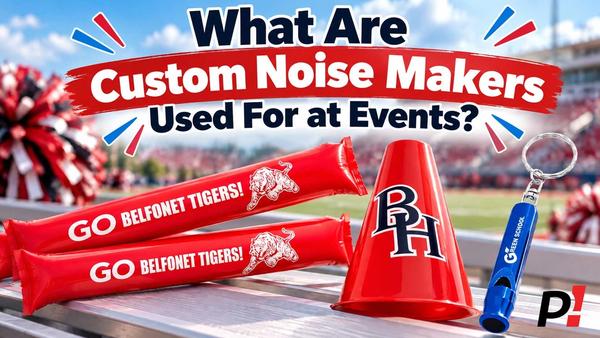
What Are Custom Noise Makers Used For at Events?
Custom noise makers turn up the volume at trade shows, pep rallies, and safety events. This buyer's guide covers practical uses, creative giveaway ideas, and how to order bulk logo noise makers with confidence.
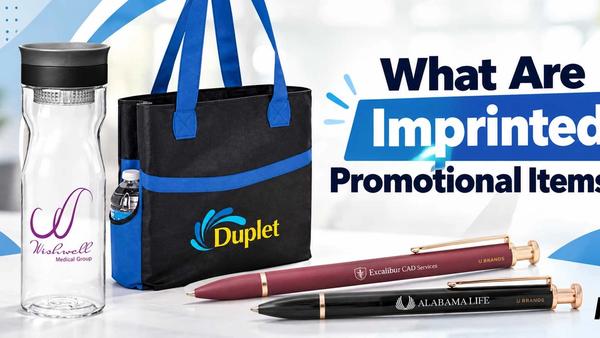
What Are Imprinted Promotional Items?
Imprinted promotional items are branded products ordered in bulk and decorated with your logo. This guide explains how they work, who uses them, and how to order.
Are Branded Clipboards Still Useful for Modern Businesses?
Branded clipboards remain a practical, high-visibility promotional tool for any organization that still runs on paper. Learn how bulk custom clipboards support safety programs, onboarding, and client gifts, and how to order them right.
Why Order Clipboards with a Company Logo in Bulk?
Clipboards with a company logo are a practical bulk promotional item that keeps your brand visible during training, safety audits, and client visits. Learn who orders them and how to customize them.
7 Custom Sunscreen Promotions That Work
Custom sunscreen keeps your brand top of mind at outdoor events, job sites, and client giveaways. Here are seven promotional sunscreen formats that work for marketing, HR, and safety teams.
Business Pens for Bulk Buyers: A Promotional Buyer's Guide
Business pens are still one of the hardest-working promotional products a company can order. This buyer's guide covers who orders them, what to compare, how decoration works, and the mistakes that stall a bulk order.
Promotional Matches: A Buyer's Guide for Business Giveaways
Promotional matches are a low-cost, high-impact giveaway for restaurants, trade shows, and client giveaways. This buyer's guide covers decoration options, safety considerations, and bulk ordering tips.
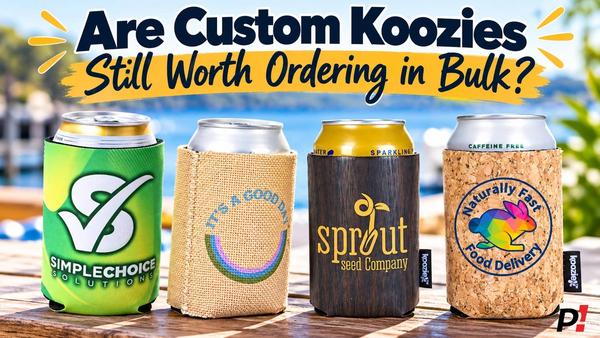
Are Custom Koozies Still Worth Ordering in Bulk?
Custom koozies remain one of the most cost-effective giveaways for trade shows, employee appreciation, and safety programs. Learn who orders them, what decoration methods work best, and how to plan a bulk order that gets used instead of tossed.