
Emergency Medical Services in the U.S.: Statistics and Trends
EMS Workforce Overview
The EMS workforce in the United States includes emergency medical technicians (EMTs), paramedics, and 911 dispatchers. EMS agencies should prioritize the care and retention of EMTs, Paramedics, and Emergency Dispatchers through EMS appreciation gifts and accessible counseling, as needed. BLS data indicate roughly 270,400 EMTs and paramedics were employed nationally in 2023.1 In addition, about 102,700 public safety telecommunicators (911 dispatchers) are employed across the country.2 However, the pool of trained EMS personnel is much larger when considering all certified individuals – a 2020 national assessment found over 1.03 million people hold state EMS licenses or certifications at some level (EMR, EMT, paramedic, etc.)3. (Many certified individuals may not be active in the field or work in related roles.) In 2021, the National Registry of EMTs reported about 456,366 nationally certified EMS professionals, a 5% increase from the year before, highlighting growth in the talent pipeline even as workforce shortages persist.4
- Gender and Diversity: The EMS profession has historically been male-dominated but is gradually becoming more diverse. As of 2019, approximately 35% of EMTs/paramedics were female (up from ~31% in 2011).5 The majority of the workforce is white (about 72% non-Hispanic white in 2019, down from 80% in 2011).6 Representation of Hispanic/Latino practitioners grew to ~13%, alongside smaller increases in other minority groups.7 Efforts to improve diversity continue. However, EMS personnel still do not fully reflect the demographics of the communities they serve.
- Geographic Distribution: EMS personnel are spread across urban and rural areas, with the highest absolute numbers in populous states. For example, California employs about 22,000 EMTs and paramedics, Texas ~19,000, and New York ~18,600, the largest workforces in recent data.8 Urban centers naturally have large EMS staffing. Yet, rural areas rely heavily on volunteer EMTs and often face severe shortages.9 Workforce distribution is still a challenge. Some regions have an abundance of credentialed providers who work in hospitals or other settings. At the same time, small-town EMS agencies struggle to fill ambulance shifts.10 In fact, one analysis in Texas found over 70% of individuals with an EMS license were not working in ambulance services, illustrating the gap between certified personnel and those actively working on EMS response teams.
- Volunteer vs. Career Providers: A significant portion of EMS in America is provided by volunteers, especially in rural communities. There are over 18,200 local EMS agencies responding to 911 calls nationwide, ranging from fire-department-based systems to private ambulance companies and volunteer squads.11 Many smaller towns depend on volunteer EMTs and cross-trained fire rescue personnel. This model creates disparities – some rural agencies can only staff ambulances through volunteer availability, whereas metropolitan EMS systems employ full-time crews. Volunteer recruitment and retention have become a critical issue as call volumes climb.
- Turnover and Shortages: EMS agencies are reporting increasing difficulty in maintaining staffing levels. A national survey in late 2022 found EMS turnover rates jumped from an average of 8% in 2019 to about 11% in 2022.12 At the same time, agencies saw 13% fewer new applications for EMT/paramedic positions compared to pre-pandemic levels.13 Nearly every state is facing a paramedic shortage, with many local EMS services struggling to fill open positions.14. Leaders cite a combination of factors: low pay, burnout, competition from hospitals (which increasingly hire paramedics for clinical roles), and the demanding nature of EMS work. “Currently, our nation’s EMS system is facing a crippling workforce shortage,” the President of the National Association of EMTs warned in 2022.15 Notably, since COVID-19, hospitals have started hiring EMTs and paramedics at higher wages (e.g. as ER techs), pulling many clinicians out of ambulance jobs in search of better pay and hours.16. This exacerbates the staffing crunch for 911 response units.
- Job Outlook: Despite these challenges, demand for EMS is expected to grow. The U.S. Bureau of Labor Statistics projects 6% job growth for EMTs and paramedics from 2023 to 2033 – faster than the average occupation.17 An average of 19,000+ EMS job openings are projected each year due to industry growth and the need to replace those leaving the field (retirements, career changes).18 Workforce development (e.g. incentives, education pathways) remains a key focus to meet the rising call volumes and population needs.
Salaries and Compensation
EMS compensation varies by role, certification level, and region. In general, EMTs earn lower wages than paramedics (who have more advanced training), and 911 dispatchers fall somewhere in between. Below are recent average salary figures for each role, with variations:
- Emergency Medical Technicians (EMTs): The median annual wage for EMTs was about $41,340 (approximately $19.90 per hour) as of May 2024.19 Basic EMTs, who provide BLS (basic life support) care, are often entry-level and may earn near the lower end of the range. Many EMTs, especially in private ambulance services or rural areas, have quite modest pay – a national workforce survey found 2 in 5 EMTs earned under $15 per hour (often forcing them to work overtime or take additional jobs).20 Low wages are a long-standing issue: over 50% of EMS personnel work two or more jobs to make ends meet.21 In some states and settings, EMTs are essentially volunteers or receive only small stipends. By contrast, unionized EMS systems in large cities may offer higher hourly rates, but those remain the exception.
- Paramedics: The median annual wage for paramedics (ALS providers) was about $58,410 as of May 2024, equivalent to roughly $28 per hour.22 Paramedics’ pay tends to be higher than EMTs due to their advanced scope of practice (administration of drugs, intubation, etc.) and greater training requirements. Still, even paramedic pay lags behind comparably skilled healthcare roles. About half of paramedics reported earning in the range of $21–$30 per hour in a 2022 survey, though some experienced paramedics in high-cost urban areas or fire departments can earn more.23 Geographic differences are significant: for example, the average paramedic salary in Hawaiʻi and Washington State exceeds $55,000 a year (among the highest in the nation), whereas paramedics in parts of the South or rural Midwest often earn closer to $35–$40k.24 The cost-of-living and funding models (e.g. county EMS vs. private ambulance) heavily influence pay scales.
- 911 Dispatchers (Public Safety Telecommunicators): Emergency dispatchers – including police, fire, and ambulance dispatch – had a median annual wage of about $50,730 (approximately $24.40/hour) in May 2024.25. Dispatchers who work specifically in EMS call centers or combined 911 centers are included in this category. Salaries for dispatchers also vary by region and agency; larger metropolitan 911 centers tend to pay more, while small-town dispatchers may earn less. Dispatch is often a civil service position with benefits, which can make the overall compensation (including overtime and benefits) competitive compared to field EMTs. However, dispatcher pay still does not always reflect the high responsibility and stress of the job, and many areas report short staffing in 911 centers similar to field EMS.
Salary Trends: Overall, EMS remains a relatively low-paid profession compared to other healthcare and public safety jobs. Pay and benefits are consistently cited as top concerns for EMS workers.26 One systemic issue is that ambulance services are reimbursed by Medicare/Medicaid at rates that often barely cover costs, limiting agencies’ ability to raise wages.27. Some improvements are occurring – over 93% of EMS agencies surveyed reported increasing wages between 2019 and 2022, with an average ~10% uptick in pay scales.28 Certain states and municipalities have also boosted EMS pay through local funding. But despite these raises, many EMTs and paramedics still struggle financially, leading to moonlighting in emergency rooms, fire departments, or completely different fields for additional income.29
911 Call Volume and EMS Operational Data
EMS is a critical component of the emergency response system, answering tens of millions of calls for help each year. EMS call volume has been rising steadily due to population growth, an aging populace, and greater utilization of 911 for medical emergencies. Some key operational statistics:
- 911 Medical Calls: Local EMS agencies handle an enormous workload. Each year, they respond to nearly 28.5 million 911 dispatches for medical emergencies (estimate from 41 states reporting).30 This translates to roughly 78,000 EMS 911 calls per day nationwide. The actual number is likely higher when accounting for all states and territories. For context, EMS calls include anything from car accident injuries and heart attacks to behavioral crises and falls – a very broad spectrum. Medical 911 calls have grown annually; many EMS systems report 5–10% increases in call volume year-over-year and even higher spikes during the COVID-19 pandemic waves.
- EMS Agencies and Resources: The EMS system is decentralized, with a mix of provider types. There are over 18,200 local EMS agencies across the U.S. responding to emergency calls.31 These agencies collectively operate a vast fleet of about 73,500 ground EMS vehicles, including ambulances and fire apparatus used for medical response.32 In addition, more than 750 air medical services (helicopter and fixed-wing ambulance programs) are licensed across states to transport critical patients.33 This infrastructure represents the frontline capacity for prehospital care. On average, the U.S. has roughly 2.2 EMS agencies per county, but the distribution is uneven – urban counties may have multiple ambulance services, whereas some rural counties rely on just one small volunteer squad.
- Response Times: Speed of response is a vital performance metric for EMS. While there is no single national response time figure (times vary by locale and priority of call), many EMS systems strive for an 8-minute response for life-threatening emergencies in urban settings (a benchmark based on cardiac arrest survival research). In practice, response times range widely. Urban areas often achieve median EMS response around 6–8 minutes, whereas rural areas, with longer travel distances and fewer crews, may have average response times of 15 minutes or more. Worryingly, recent workforce strains have caused response times to increase in some regions. In a 2022 survey, 49% of EMS agencies reported having to lengthen their response times (relaxing response-time standards) due to staffing and resource shortages.34 This indicates that in many communities, ambulances are taking longer to reach 911 callers than a few years ago, especially for non-life-threatening calls where some agencies have implemented tiered or delayed responses.35 The impact on patient outcomes is an ongoing concern, and agencies are triaging calls to manage limited resources (e.g. sending an ambulance only to high-acuity cases or using alternate responses for minor calls).36
- Patient Transport & Outcomes: The majority of 911 calls to EMS result in patients being transported to hospitals, but not all. National data from NHTSA’s EMS Information System (NEMSIS) suggest that 70–80% of EMS responses lead to patient transport to an emergency department, while the remainder might be treated on scene (or occasionally result in no patient found). EMS care has a direct impact on critical outcomes: for example, rapid EMS intervention has improved survival in out-of-hospital cardiac arrest and major trauma over the years. Patient outcomes vary by condition – e.g., the nationwide survival to hospital discharge after sudden cardiac arrest is on the order of 10% (higher if the arrest is witnessed and bystander CPR/AED is provided). Trauma mortality is significantly reduced when patients receive timely paramedic care and rapid transport to trauma centers. Additionally, EMS is increasingly involved in community paramedicine and preventive care, aiming to reduce unnecessary hospitalizations and improve overall patient outcomes. These programs are not yet widespread, but they represent a growing trend in EMS operations.
(Sources: National EMS databases and studies; for instance, out-of-hospital cardiac arrest survival data via CARES registry and AHA reports.)37
Mental Health and Burnout in EMS
The mental health of EMS professionals is a major concern, as they face high stress, critical incidents, and challenging work conditions. Research and surveys in recent years paint a sobering picture of elevated rates of burnout, PTSD, and other mental health issues among EMTs, paramedics, and dispatchers:
- Burnout: EMS clinicians exhibit “heightened burnout” compared to many other occupations.38 Long hours, life-and-death stakes, and physical and emotional strain contribute to exhaustion. A 2023 study noted that EMS practitioners have high burnout and often experience workplace issues like increased incivility, more frequent sick leave, and overall reduced workforce availability due to stress.39 In 2022, the U.S. Surgeon General even issued an advisory on health worker burnout, underscoring that frontline healthcare providers – including EMS – are facing a crisis of fatigue and mental strain.40 Burnout not only affects providers’ well-being but also has practical impacts: it correlates with higher turnover and intentions to leave the profession. Those who reported low job satisfaction had dramatically higher odds of planning to quit EMS within a year.41 In one recent national survey, about 7–8% of EMS personnel said they were likely to leave their EMS job in the next 12 months (for reasons other than retirement) – a startling indicator of attrition risk, largely linked to burnout and frustration.42
- PTSD and Psychological Trauma: Repeated exposure to traumatic events (severe injuries, death, violence) puts EMS providers at risk for post-traumatic stress disorder (PTSD). Various studies have found PTSD prevalence among first responders to be substantially higher than in the general population. Estimates for EMS personnel range from roughly 10% to 20% having diagnosable PTSD at some point in their career, several times the ~7% lifetime PTSD rate in the general U.S. population. Even those without full PTSD often report symptoms like intrusive memories, anxiety, and insomnia related to calls. For example, paramedics commonly cite the accumulation of pediatric fatalities, gruesome scenes, or threats to their own safety as triggers for chronic stress. Over time, this can lead to depression, substance use, or compassion fatigue. Mental health support specifically for EMS (peer counseling, debriefings, professional therapy) is increasingly recognized as essential, though access remains uneven across organizations.
- Depression and Suicide: Studies also highlight elevated depression rates among EMS professionals. Chronic stress, rotating shifts, sleep disruption, and organizational stressors (like inconsistent pay or lack of support) all contribute to mental health challenges. Alarmingly, surveys have revealed that suicidal ideation is far more common in EMS and firefighting than in the general public. In one national survey, about 37% of EMS personnel reported they had contemplated suicide, compared to 3–4% of the general population, and around 6–7% had actually attempted suicide in the past.43 (By contrast, roughly 0.5% of the general population has attempted suicide.) This disparity underscores the toll that emergency services work can take. The Code Green Campaign and other first responder mental health initiatives have drawn attention to these statistics, pushing agencies to adopt programs that address PTSD, depression, and suicide prevention. Many EMS agencies are now instituting employee assistance programs, critical incident stress debriefings, chaplain services, and peer support teams to help providers process the psychological impact of the job.
- Job Satisfaction and Morale: The combination of high stress and relatively low pay can erode job satisfaction among EMS workers. In NAEMT’s 2022 national workforce survey, EMS professionals indicated that work-life balance issues (inability to spend time with family, etc.) edged out even pay as the number one reason they consider leaving.44 Being short-staffed also means many are working mandatory overtime, leading to fatigue. Despite these challenges, it’s worth noting that many EMTs and paramedics exhibit remarkable resilience and dedication. Job satisfaction in EMS often comes from helping others and saving lives. Yet, the system-level issues (burnout, mental health struggles, feeling undervalued) are prompting concerted efforts to improve the EMS work environment, for example, developing mental wellness programs and advocating for better compensation and working conditions to boost morale.
Additional Trends and Challenges in EMS
Beyond the core statistics above, several notable trends and challenges are shaping EMS in 2023 and beyond:
- Workforce Recruitment and Retention: Attracting and retaining EMS personnel is a top challenge. The COVID-19 pandemic intensified this, as some providers left due to safety concerns or burnout.45 EMS agencies and state governments have responded with innovative recruitment strategies – for instance, lowering the minimum age for EMT certification in some states to 17 or 18 (and even offering high school EMT programs) to enlarge the candidate pool.46 Nearly 40 state legislatures considered EMS workforce bills in 2022, including tuition incentives, tax credits for volunteers, and streamlined reciprocity for out-of-state medics.47 Despite more people getting certified each year, the mismatch between where providers live vs. where they’re needed is a problem.48 Rural areas especially struggle to keep providers, as younger EMTs often move to cities for better pay and experience.49 Retention efforts (bonuses, career ladders, mental health support) are becoming as crucial as recruitment.
- Funding and Reimbursement: The EMS system’s financial model presents challenges. Ambulance services rely on reimbursements from Medicare, Medicaid, and insurance, which often do not fully cover costs of readiness and response.50 Many EMS agencies operate on thin margins; those in rural areas might receive local subsidies or be volunteer-based due to insufficient revenue. The federal government has been piloting projects to reform ambulance reimbursement (e.g., the ET3 model allows payment for treating patients on the scene or via telehealth instead of only for transport). According to industry advocates, more sustainable funding is needed to prevent ambulance service closures and to enable wage increases for EMS personnel.51 Some states have introduced supplemental payment programs or increased local funding for EMS after high-profile instances of ambulance shortages.
- EMS Response Models Evolving: To cope with high demand and limited resources, EMS systems are innovating. Tiered response is increasingly common – sending BLS (basic life support) crews to minor calls and reserving ALS (advanced life support) paramedic units for critical emergencies.52 About 28% of agencies surveyed moved from all-ALS responses to a tiered model in recent years.53 Additionally, over one-third of agencies have implemented alternate response programs for low-acuity calls, such as deploying nurse advice lines, telemedicine, or community paramedics to handle non-urgent cases that don’t require an ambulance transport.54 These approaches aim to reduce strain on 911 systems and hospitals. Another trend is the rise of Mobile Integrated Healthcare (MIH)/Community Paramedicine programs, where EMS providers perform scheduled home visits, chronic disease check-ups, or frequent 911 user interventions. While not yet widespread, early results show these programs can reduce 911 calls and ER visits by addressing patients’ needs proactively.
- Quality and Data Improvements: EMS is increasingly data-driven. All 50 states now contribute data to the National EMS Information System (NEMSIS), which in 2023 collected detailed information from over 49 million EMS activations. This allows analysis of national trends in response times, treatment provided, and patient outcomes. For instance, data help identify variations in cardiac arrest survival by region or highlight successes like improved trauma survival when tourniquets are used. The NHTSA Office of EMS and other agencies use this data to develop evidence-based guidelines. One example is the national push for high-performance CPR protocols in cardiac arrest, which has shown to significantly improve ROSC (return of spontaneous circulation) rates in the field. Continuous quality improvement programs within EMS agencies are also growing – many services now review metrics like first-paramedic-on-scene time, intubation success rates, pain management, and patient satisfaction scores to drive improvements.
- Health and Safety of EMS Providers: There is increasing recognition of the health risks faced by EMS personnel. Beyond mental health, EMTs and paramedics have high rates of physical injury (from lifting patients, etc.), with thousands of on-the-job injuries annually. Ambulance crashes are another serious hazard – an estimated 6,500 ambulance crashes occur in the U.S. each year, leading to provider and patient injuries.55 Efforts such as improved safety standards for ambulances, better driver training, and use of restraints for providers in the patient compartment are underway to reduce line-of-duty injuries and deaths. Additionally, the pandemic reminded everyone of the infection risks for EMS; providers now routinely use PPE and many have faced PTSD from the pandemic’s toll.56 Supporting the well-being of EMS professionals is seen as key to the future of the field, as high turnover can cripple emergency response in communities. National stakeholders (NAEMT, NHTSA, etc.) have called for a “Year of the EMS Clinician” focus on provider health, safety, and resilience.
In summary, emergency medical services in the United States are essential but strained. The latest statistics show a workforce of hundreds of thousands of dedicated individuals responding to tens of millions of emergencies annually. They do so for modest pay and under significant stress, yet their impact on public health and safety is immense. Current data and trends highlight both the immense scale and importance of EMS – over 28 million calls a year, lives saved daily – and the serious challenges – staffing shortfalls, mental health struggles, funding gaps – that must be addressed to ensure the EMS system remains ready and reliable for all Americans in the years ahead. Retention and care of EMS personnel should be a priority for agencies across the United States.
References:
Key data were drawn from the U.S. Bureau of Labor Statistics, National Highway Traffic Safety Administration (Office of EMS), National Association of EMTs (NAEMT) surveys, the 2020 National EMS Assessment, and recent peer-reviewed studies on the EMS workforce and health.57,58 For detailed references, see the linked citations throughout this report. Each citation corresponds to an authoritative source, such as a government report, academic journal, or professional association publication, providing the evidence for the statistics and statements made above.
- "EMTs and Paramedics." U.S. Bureau of Labor Statistics.
- "Public Safety Telecommunicators." U.S. Bureau of Labor Statistics.
- "2020 EMS Assessment." National Association of State EMS Officials.
- "States Strive to Reverse Shortage of Paramedics, EMTs." NAEMT.
- "Trends in U.S. EMS workforce demographic and employment characteristics, 2011-2019." National Registry of Emergency Medical Technicians.
- "Trends in U.S. EMS workforce demographic and employment characteristics, 2011-2019." National Registry of Emergency Medical Technicians.
- "Trends in U.S. EMS workforce demographic and employment characteristics, 2011-2019." National Registry of Emergency Medical Technicians.
- "Occupational Employment and Wage Statistics: Medical Technicians and Paramedics." U.S. Bureau of Labor Statistics.
- "States Strive to Reverse Shortage of Paramedics, EMTs." NAEMT.
- "States Strive to Reverse Shortage of Paramedics, EMTs." NAEMT.
- "National Association of State EMS Officials releases stats on local agencies, 911 calls." EMS1.
- "2023 National Survey EMS Economic and Operational Models Executive Summary." NAEMT.
- "2023 National Survey EMS Economic and Operational Models Executive Summary." NAEMT.
- "States Strive to Reverse Shortage of Paramedics, EMTs." NAEMT.
- "States Strive to Reverse Shortage of Paramedics, EMTs." NAEMT.
- "States Strive to Reverse Shortage of Paramedics, EMTs." NAEMT.
- "EMTs and Paramedics." U.S. Bureau of Labor Statistics.
- "EMTs and Paramedics." U.S. Bureau of Labor Statistics.
- "EMTs and Paramedics." U.S. Bureau of Labor Statistics.
- "States Strive to Reverse Shortage of Paramedics, EMTs." NAEMT.
- "States Strive to Reverse Shortage of Paramedics, EMTs." NAEMT.
- "EMTs and Paramedics." U.S. Bureau of Labor Statistics.
- States Strive to Reverse Shortage of Paramedics, EMTs." NAEMT.
- "Occupational Employment and Wage Statistics: Medical Technicians and Paramedics." U.S. Bureau of Labor Statistics.
- "Occupational Outlook Handbook: Public Safety Telecommunicators. U.S. Bureau of Labor Statistics.
- States Strive to Reverse Shortage of Paramedics, EMTs." NAEMT.
- States Strive to Reverse Shortage of Paramedics, EMTs." NAEMT.
- "2023 National Survey EMS Economic and Operational Models Executive Summary." NAEMT.
- States Strive to Reverse Shortage of Paramedics, EMTs." NAEMT.
- "National Association of State EMS Officials releases stats on local agencies, 911 calls." EMS1.
- "National Association of State EMS Officials releases stats on local agencies, 911 calls." EMS1.
- "National Association of State EMS Officials releases stats on local agencies, 911 calls." EMS1.
- "National Association of State EMS Officials releases stats on local agencies, 911 calls." EMS1.
- "2023 National Survey EMS Economic and Operational Models Executive Summary." NAEMT.
- "2023 National Survey EMS Economic and Operational Models Executive Summary." NAEMT.
- "2023 National Survey EMS Economic and Operational Models Executive Summary." NAEMT.
- "Factors Associated With Emergency Medical Clinicians Leaving EMS." Prehospital Emergency Care.
- "Factors Associated With Emergency Medical Clinicians Leaving EMS." Prehospital Emergency Care.
- "Factors Associated With Emergency Medical Clinicians Leaving EMS." Prehospital Emergency Care.
- "Factors Associated With Emergency Medical Clinicians Leaving EMS." Prehospital Emergency Care.
- "Factors Associated With Emergency Medical Clinicians Leaving EMS." Prehospital Emergency Care.
- "Factors Associated With Emergency Medical Clinicians Leaving EMS." Prehospital Emergency Care.
- "Factors Associated With Emergency Medical Clinicians Leaving EMS." Prehospital Emergency Care.
- States Strive to Reverse Shortage of Paramedics, EMTs." NAEMT.
- States Strive to Reverse Shortage of Paramedics, EMTs." NAEMT.
- States Strive to Reverse Shortage of Paramedics, EMTs." NAEMT.
- States Strive to Reverse Shortage of Paramedics, EMTs." NAEMT.
- States Strive to Reverse Shortage of Paramedics, EMTs." NAEMT.
- States Strive to Reverse Shortage of Paramedics, EMTs." NAEMT.
- States Strive to Reverse Shortage of Paramedics, EMTs." NAEMT.
- States Strive to Reverse Shortage of Paramedics, EMTs." NAEMT.
- "2023 National Survey EMS Economic and Operational Models Executive Summary." NAEMT.
- "2023 National Survey EMS Economic and Operational Models Executive Summary." NAEMT.
- "2023 National Survey EMS Economic and Operational Models Executive Summary." NAEMT.
- "National Association of State EMS Officials releases stats on local agencies, 911 calls." EMS1.
- States Strive to Reverse Shortage of Paramedics, EMTs." NAEMT.
- "National Association of State EMS Officials releases stats on local agencies, 911 calls." EMS1.
- "Factors Associated With Emergency Medical Clinicians Leaving EMS." Prehospital Emergency Care.
Order Custom Promotional Product Ideas Today
Our team can help you pick the right product, decoration, and quantity for your project. Reach out and we’ll send tailored ideas — usually within one business day.
See Related Blogs About Promotional Product Ideas

12 Employee Appreciation Gift Ideas for Every Budget
Looking for employee appreciation gift ideas that fit any budget? This list of 12 bulk promotional gifts covers everything from custom water bottles to tech accessories, helping you show gratitude without breaking the bank.


Best Trade Show Giveaways for 2026 That Actually Work
Trade shows are one of the most expensive marketing investments most companies make, yet the majority of giveaways handed out at these events are forgotten before attendees even leave the building. Th…

Go Long at Your Next Tailgate with the 6 Inch Mini Plastic Footballs
As you saw in the video, these 6" plastic mini footballs feature your logo in a way that demands attention. These mini footballs are perfect for tailgates, pep rallies, or trade show giveaways. These…

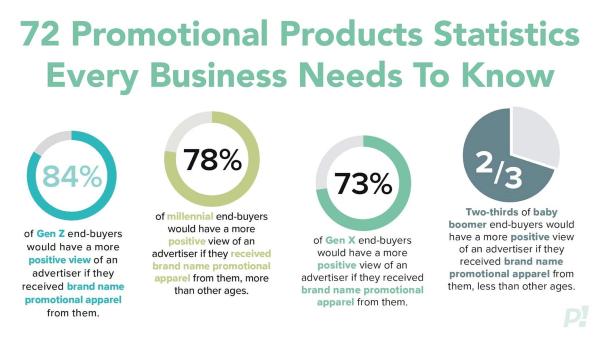
72 Promotional Products Statistics Every Business Needs To Know (2025+ Data)
If you want your marketing dollars to work harder, you need to understand what actually influences your audience. The latest research from 2025 and newer studies shows that promotional products are…

10 Ways to Combine Promotional Products and AI
Promotional products have always been a powerful way to keep your brand in front of customers. But there has always been one major limitation. You could not easily track what happened after you…

New Study Reveals Promotional Products Are Among the Lowest in Carbon Emissions Among Other Advertising Mediums
There has been a long-standing belief in marketing. Digital advertising is cleaner. Physical products create more waste. Therefore, promotional products must have a larger environmental impact. New…